
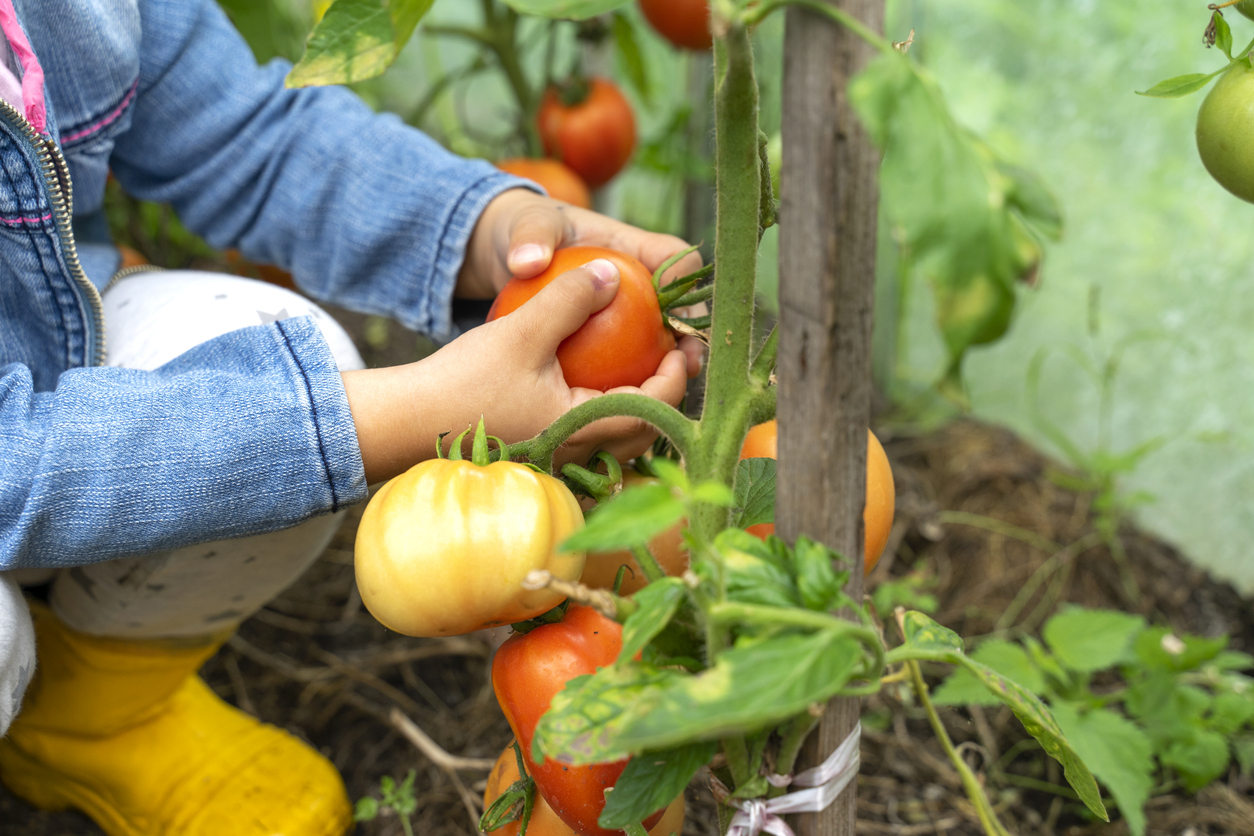
I have spent 22 years as an educator in the public school system, so what I am about to say may shock some people.. What if one of the best places for a child to learn resilience isn't inside a classroom? I said ONE of the best places; not the only place. Giving children and young adults the time to create, collaborate, evaluate, reflect, and engage in hands-on learning is crucial for cognitive development and extremely powerful. It doesn’t simply mean that they will “learn and retain” more, it means that they will have a deepened understanding and relationship with the content.
Standing in a garden with dirt under their fingernails, feeding an animal before breakfast, pulling weeds when they'd rather be playing, or discovering that the seeds they carefully planted simply didn't grow is just that… a relationship and learning built through an experience that cannot be simply read about or learned through pictures. Farming has a way of teaching lessons without announcing that a lesson is happening. Children learn that living things require consistency. They discover that effort doesn't always produce immediate results. They experience disappointment—and then have something constructive to do about it.
Somewhere between planting, feeding, waiting, failing, adjusting, and trying again, they're growing too. Now that is a beautiful thing isn’t it?
Something Depends on Them
One of the most valuable things farming can give children is real responsibility. Plants need water. Animals need food. Gardens need tending. The work isn't simply assigned to keep a child busy; it has a purpose.
That sends an important message:
I am capable. I can contribute. What I do matters.
Research on school gardening has repeatedly identified themes of responsibility, independence, confidence, self-esteem, interpersonal skills, and well-being. Confidence built through contribution is different from confidence built through praise. Instead of simply hearing "You can do hard things," children begin collecting evidence that they actually can.
This idea of taking pride and ownership in the labor that you do with your own hands cultivates self-respect, reflection, and emotional development learned through both disappointment and success.
Failure Becomes Part of the Process
Something that we have seen increase over the last decade as educators is this struggle students face when they encounter a setback or failure. Whether it is minor or momentous the struggle is there and our children flounder in that space. Becoming a resilient adult is much easier when the process of practicing gratitude and learning how to bounce back from setbacks happens earlier in life in age appropriate situations.
When it comes to farming the stakes are low, but the skills it teaches and the lessons learned are immeasurable. Seeds don't germinate. Plants die. Weather changes plans. Animals don't cooperate. You learn you can only control the controllables (which are few), but that your response to the “uncontrollables” are most important!
Farming doesn't allow us to eliminate setbacks for children—but it gives them opportunities to learn what to do after a setback.
What happened? What can I change? What should I try next?
Failure becomes information rather than a verdict.
Growing Bodies & Minds
Nature-based experiences offer benefits beyond resilience. Research involving young children has found promising associations between nature-based education and self-regulation, social skills, social-emotional development, play, and opportunities for creativity and social interaction, though researchers describe the certainty of some of this evidence as low.
Farming also naturally encourages problem-solving.
Why isn't this growing? How much water does it need? What is eating the leaves? What should we do differently next time?
Children observe, predict, experiment, evaluate, and adjust. There isn't always an answer key—and that's precisely the point.
Maybe Kids Need More Things That Can't Be Rushed
Children are growing up in a world of instant answers, constant stimulation, packed schedules, and immediate gratification.
A seed doesn't care.
You can give it good soil, sunlight, and water—and then you have to wait.
Perhaps children need more experiences like that. Things that require patience. Things that get messy. Things that can't be swiped away when they become frustrating. Things that require them to show up again tomorrow regardless of how they felt frustrated or defeated or the day before. Because ultimately, farming isn't just about teaching children how to grow food. It's about giving them opportunities to practice responsibility, patience, problem-solving, resilience, and care.
And perhaps that's the beautiful irony of it all:
We may think we're teaching children how to grow things, yet somewhere along the way, farming and gardening is helping grow them too.
